Runwal Heights Mulund West Mumbai Maharashtra India.


Free+91 7738735370 or +91 9820635370
The mica group of sheet silicate minerals comprises several closely related materials characterized by their highly perfect basal cleavage. These minerals are generally monoclinic, with a tendency to form pseudo-hexagonal crystals, and share similar chemical compositions.
Micas are widely distributed and occur in igneous, metamorphic, and sedimentary geological formations. Scrap and flake mica are produced across various regions of the world. Flake mica is obtained from several sources, including the metamorphic rock schist, as a by-product of feldspar and kaolin processing, from placer deposits, and from pegmatites.
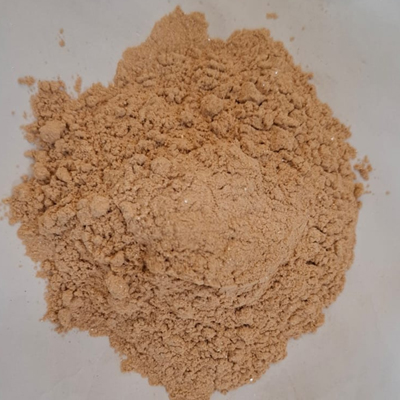
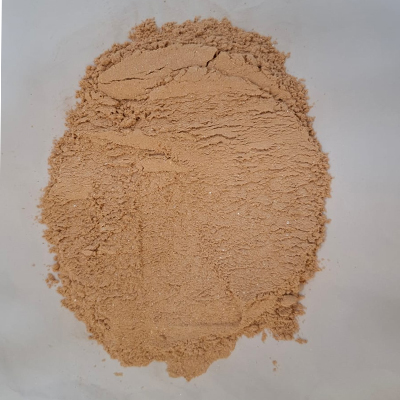
| Chemical Analysis | |
|---|---|
| K2O | 11% - 13% |
| SiO2 | 42% - 48% |
| CaO | 1% max |
| R2O3 | 35% - 40% |
| Loss on Ignition | 3% - 5% |
| Sieve Analysis | |
| -100 mesh | 100% passing |
| -200 mesh | 60% passing |
Produced by calcining mica at 850 degree Celsius
Manufactured using the K-Oil treatment method
Suitable for use in the pearlescent pigment industry
Available as both flakes and powder
Available in any required mesh size
Calcined mica is primarily used in the pearlescent pigment industry. Both calcined mica flakes and calcined mica powder can be supplied according to the required mesh size.
Calcined mica is mica that has been calcined at 850 degree Celsius using the K-Oil treatment method. It is available in both flake and powder forms.
Calcined mica is used in the pearlescent pigment industry.
We produce both calcined mica flakes and calcined mica powder.
Yes. Calcined mica flakes and calcined mica powder can be produced and supplied in any required mesh size.